整理/余冰玥 制图/周子祺(实习生) 张玉佳
哀乐有节
对于喜怒哀乐这类情绪的表达,既要合乎法度,又不能过于偏激乖戾,必须由情而发,并受到礼的约束。这既可作为一种人生哲学,也能用于艺术创作,核心思想在于儒家的中庸之道,即不偏不倚,无过无不及,凡事皆恰到好处。若能在作文、写诗或绘画等文艺活动中遵循这一原则,作品自然呈现均衡中和之美,也契合温柔敦厚的教化之意。
Express Grief and Joy in Accordance with the Rules of Propriety
The term holds that all expressions of grief and joy should be kept under the restraint of propriety. It means that artists should not be extreme when giving vent to their feelings. They should start off with feelings but end in self-discipline. The term applies to both the philosophical field and artistic creation. What it accentuates is the golden mean, a Confucian term advocating impartiality, reconciliation, and compromise, with propriety as its overriding principle. If an artist obeys the golden mean, whether he writes an essay or a poem or paints a picture, his work will naturally show the beauty of equilibrium and highlight the gentleness and honesty of the Confucian doctrine.
引例
喜怒哀乐,情也。其未发,则性也,无所偏倚,故谓之中。发皆中节,情之正也,无所乖戾,故谓之和。(朱熹《中庸章句》)(喜怒哀乐,是人类的情感。它们没有表达出来时属于自然天性,没有特殊偏向,故称作“中”。它们表达出来后,若符合规范,情感中正,没有乖违偏激,故称作“和”。)
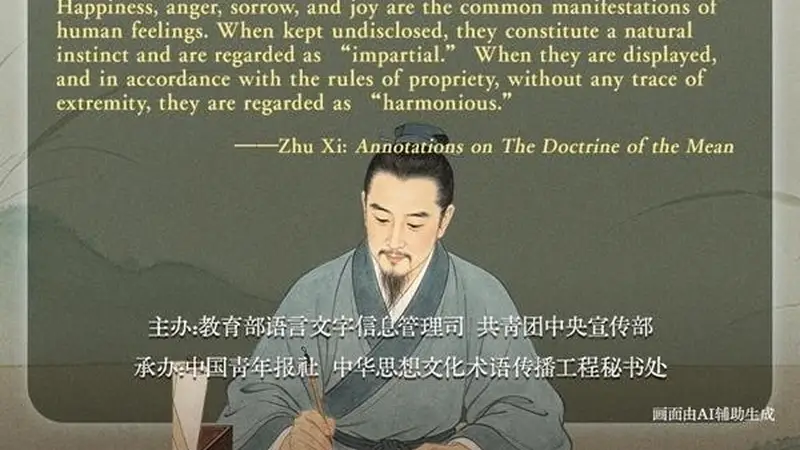
Happiness, anger, sorrow, and joy are the common manifestations of human feelings. When kept undisclosed, they constitute a natural instinct and are regarded as "impartial". When they are displayed, and in accordance with the rules of propriety, without any trace of extremity, they are regarded as "harmonious". (Zhu Xi: Annotations on The Doctrine of the Mean)
来源:中国青年报
2026年07月24日 02版